What companies usually mean when they ask for SEO services
The market mixes a lot of terms together: SEO services, search engine optimization, technical SEO, content SEO, local SEO and link building. In practice, most companies are looking for a combination. They want a technically healthy site, strong pages for important search terms, the right pages ranking and visibility that eventually turns into qualified demand.
That makes SEO more complex than a checklist. A site can load quickly and still fail to grow because the information architecture is weak. Or there may be plenty of content online, but the copy does not answer what users actually want to know when they search. Sustainable growth only starts when technical foundations, content, internal linking and authority work together.
The four components of strong SEO services
- Technical SEO: crawlability, indexation, canonicalization, structured data, Core Web Vitals and the errors that prevent important pages from being processed properly.
- Content SEO: pages and articles that match search intent, not just a keyword list. Every important term needs a clear content home.
- Internal linking and site architecture: search engines understand priority better when your structure is clear and related pages support one another logically.
- Authority and earned links: without credibility beyond your own domain, growth often plateaus in competitive markets.
Why technical SEO is almost always the first lever
Many companies already invest in content, but publish on a foundation that is not stable enough. Duplicate pages, weak canonicals, insufficient internal links, faulty redirects and page types that are hard to distinguish are all classic growth blockers. Technical SEO is not “nerdy optimization for the sake of optimization.” It is about removing friction so the rest of your SEO work can actually perform.
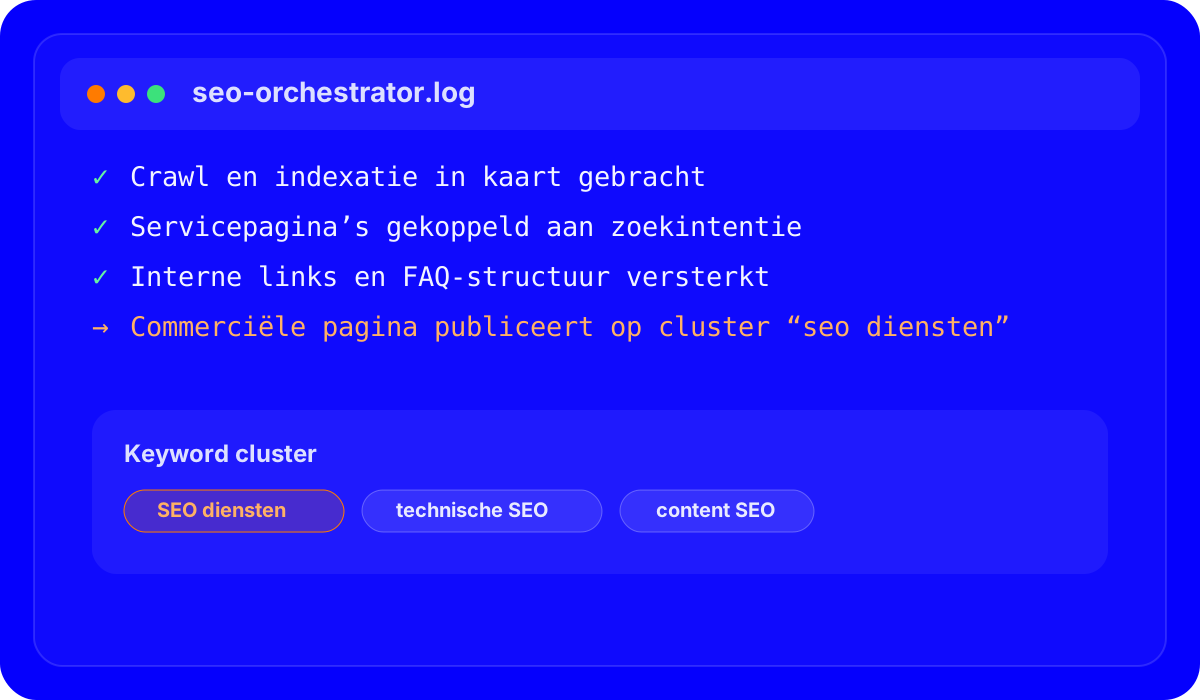
For service-led websites this matters even more. Service pages need to be clearly separated, logically placed in the hierarchy and supported by proof, FAQs and supporting content. Otherwise you get cannibalization: several pages try to rank for the same intent, and none of them becomes truly strong.
When this becomes commercially relevant
If your site already attracts traffic but produces too few qualified leads, the problem is often positioning, page structure or internal linking. In that case, an SEO audit helps faster than publishing even more disconnected content.
View SEO servicesWhy content SEO is more than publishing blog posts
Content SEO is often reduced to “publish more articles.” That is rarely enough. Companies grow when content has a clear role in the funnel. Some pages should capture direct commercial intent, while others should answer the questions that come before a decision. Strong content SEO brings structure to that mix.
That means going deeper on service pages, adding supporting guides, deploying FAQs strategically, clarifying entities and writing copy that is clear enough to work in snippets, AI answers and knowledge layers. That is why blog content and service pages should strengthen each other rather than sit side by side without a clear relationship.
When local SEO deserves separate attention
For companies with a geographic focus, local SEO is not a detail. It is about service areas, local landing pages, consistent business data, Google Business Profiles and content that supports local search intent. Local SEO becomes especially powerful when decisions are made regionally or city by city instead of nationally.
How to measure SEO without fooling yourself
Traffic alone is a weak metric. Better questions are: which pages capture relevant intent, which terms drive enquiries or qualified conversations, and which content types strengthen your commercial pages? Only then does SEO become a channel you can actively steer instead of something you passively observe.
That is why SEO reporting should show more than rankings. It should connect visibility to pipeline, forms, conversations and brand visibility. For B2B websites especially, that distinction matters.